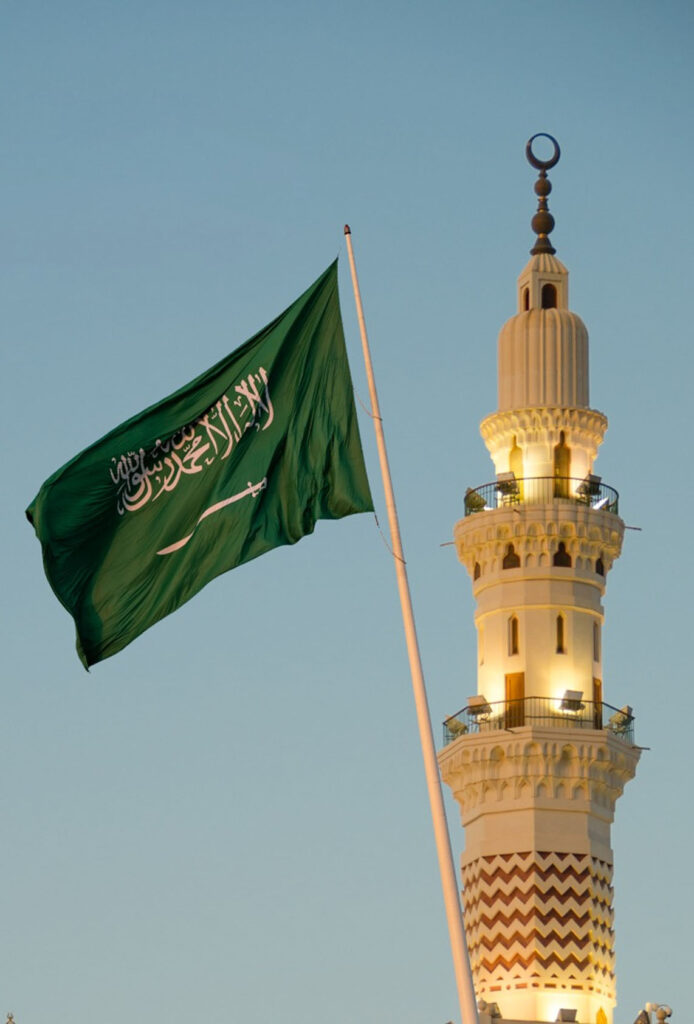
Saudi Arabia Foundation Day 2026
Every year on the twenty-second of February, the Kingdom of Saudi Arabia pauses to remember the moment when its story truly began. Foundation Day — يوم التأسيس
Saudi Arabia Foundation Day 2026: Celebrating Three Centuries of a Nation's Soul
A Day That Echoes Across Three Hundred Years
Every year on the twenty-second of February, the Kingdom of Saudi Arabia pauses to remember the moment when its story truly began. Foundation Day — يوم التأسيس — is not simply a public holiday marked by fireworks and festivities. It is a deliberate act of national memory, a collective returning to the roots from which one of the world’s most consequential nations grew. In 2026, Saudi Arabia marks the fourth official observance of Foundation Day since it was formally established as a national occasion in 2022, and it does so at a time when the kingdom is undergoing perhaps the most rapid transformation in its modern history.
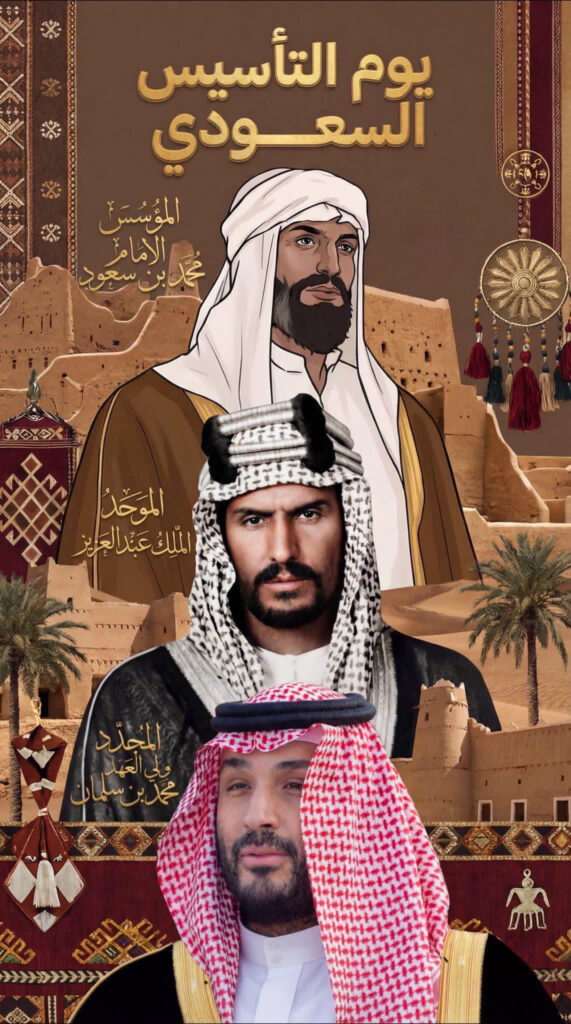
The date itself carries enormous historical weight. On the twenty-second of February 1727, Imam Muhammad ibn Saud — the ruler of the small but strategically positioned town of Diriyah in the Nejd region of the Arabian Peninsula — laid the foundations of what would eventually become the Saudi state. That founding moment was more than a political act. It was the beginning of a covenant between a leader, a people, a land, and a set of principles that would prove extraordinarily durable across centuries of challenge, conflict, and change.
The Man Behind the Moment: Imam Muhammad ibn Saud
To understand the significance of Foundation Day, one must understand the figure at its center. Imam Muhammad ibn Saud was not a conqueror in the classical sense. He was a statesman with a vision for unity in a land that had long been fractured by tribal rivalries and shifting loyalties. His governance of Diriyah was marked by a commitment to order, consultation, and the welfare of those under his protection.
In 1727, when he formalized his rule and established the principles that would guide his administration, he was essentially drawing a line in the sand of history. This, he was declaring, is where we begin. This is the foundation upon which everything else will be built. His partnership with the religious scholar Muhammad ibn Abd al-Wahhab, which emerged in the following decades, would add a spiritual and legal dimension to the political framework he had established, creating a synthesis of governance and faith that shaped the Saudi identity for generations.
What makes Ibn Saud’s legacy particularly remarkable is its longevity. He could not have foreseen the vast oil fields that lay beneath the sands of his realm, the global influence his descendants would wield, or the gleaming cities that would one day rise from the desert. Yet the structural principles he established — centralized but consultative governance, protection of the community, loyalty to the land — proved flexible enough to survive and adapt through three centuries of history.
From Diriyah to the World Stage: A Three-Century Journey
The path from Imam Muhammad ibn Saud’s founding of Diriyah to the Saudi Arabia of 2026 is one of the most dramatic national narratives in modern history. The First Saudi State, established in 1727, expanded significantly across the Arabian Peninsula before meeting its end at the hands of the Ottoman-backed Egyptian forces in 1818. The Second Saudi State rose again in 1824, only to collapse once more in 1891 amid internal strife and regional pressure.
It was the third iteration — the modern Kingdom of Saudi Arabia, formally proclaimed by King Abdulaziz ibn Saud in 1932 — that achieved the stability and territorial consolidation that defines the nation today. This history of rise, fall, and rebirth gives Foundation Day a particular emotional resonance. It is not a celebration of an unbroken arc of success. It is a recognition that the Saudi national spirit is resilient, that the idea of a unified Saudi state survived defeat and dispersal, and that the founding vision of 1727 was strong enough to be rebuilt twice.

Foundation Day 2026: The Context of a Nation in Motion
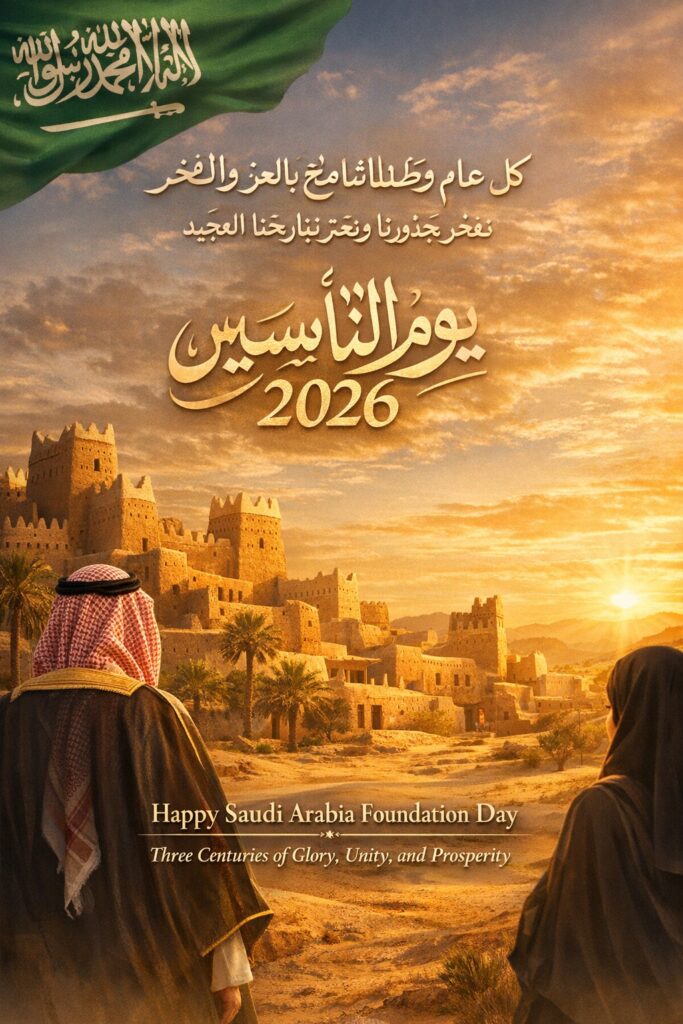
The 2026 observance of Foundation Day takes place against a backdrop of sweeping change. Saudi Arabia’s Vision 2030 — the ambitious reform agenda launched a decade ago under Crown Prince Mohammed bin Salman — is now well into its implementation phase. The economic, social, and cultural transformations it has set in motion are reshaping daily life across the kingdom in ways that would have seemed extraordinary even a generation ago.
Tourism, which was once almost entirely closed to international visitors, has blossomed into a major sector. The kingdom received tens of millions of tourists in the years leading up to 2026, drawn by newly opened heritage sites, coastal resorts along the Red Sea, and cultural attractions that were previously inaccessible to the outside world. Diriyah itself — the very birthplace of the Saudi state — has been transformed into a world-class heritage and cultural destination, allowing visitors from across the globe to walk the streets where the founding vision of 1727 first took shape.
Entertainment and the arts, once tightly restricted, have expanded dramatically. Saudi citizens now have access to cinemas, concerts, sporting events, and a growing domestic creative industry. Women drive cars, participate fully in the workforce, and occupy leadership positions across both the public and private sectors. The social fabric of the country is evolving at a pace that is exhilarating for many and challenging for others, but it is undeniably moving.
Foundation Day 2026 falls in the middle of this transition, and its celebrations reflect both continuity and change. The day honors the roots that make Saudi Arabia what it is, while simultaneously pointing toward the future that Vision 2030 is building.
How the Kingdom Celebrates
Foundation Day has developed a distinctive celebratory character in the years since it was formally instituted. Unlike National Day — which marks the proclamation of the modern kingdom on the twenty-third of September — Foundation Day carries a more specifically historical and cultural flavor. It is a day for exploring origins, for connecting with heritage, and for taking pride in the long journey that has brought Saudi Arabia to its present standing.
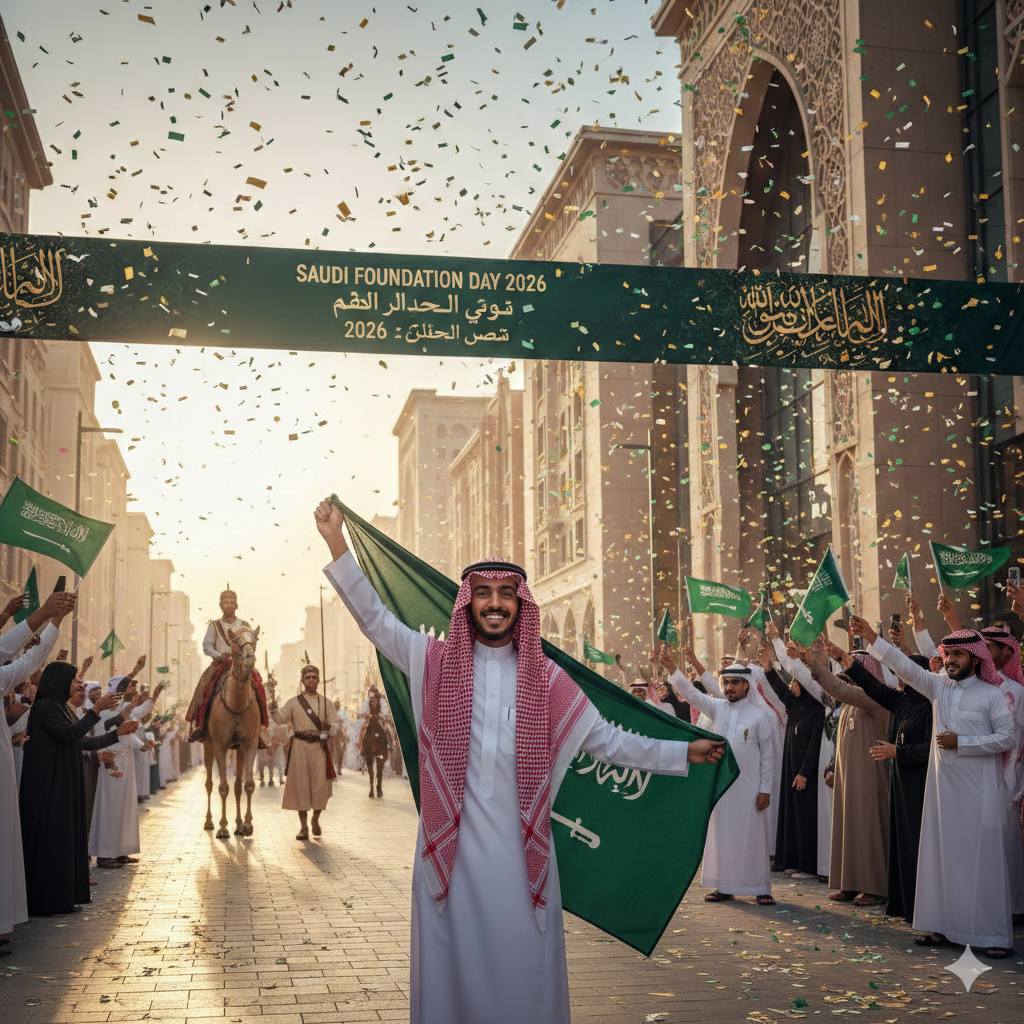
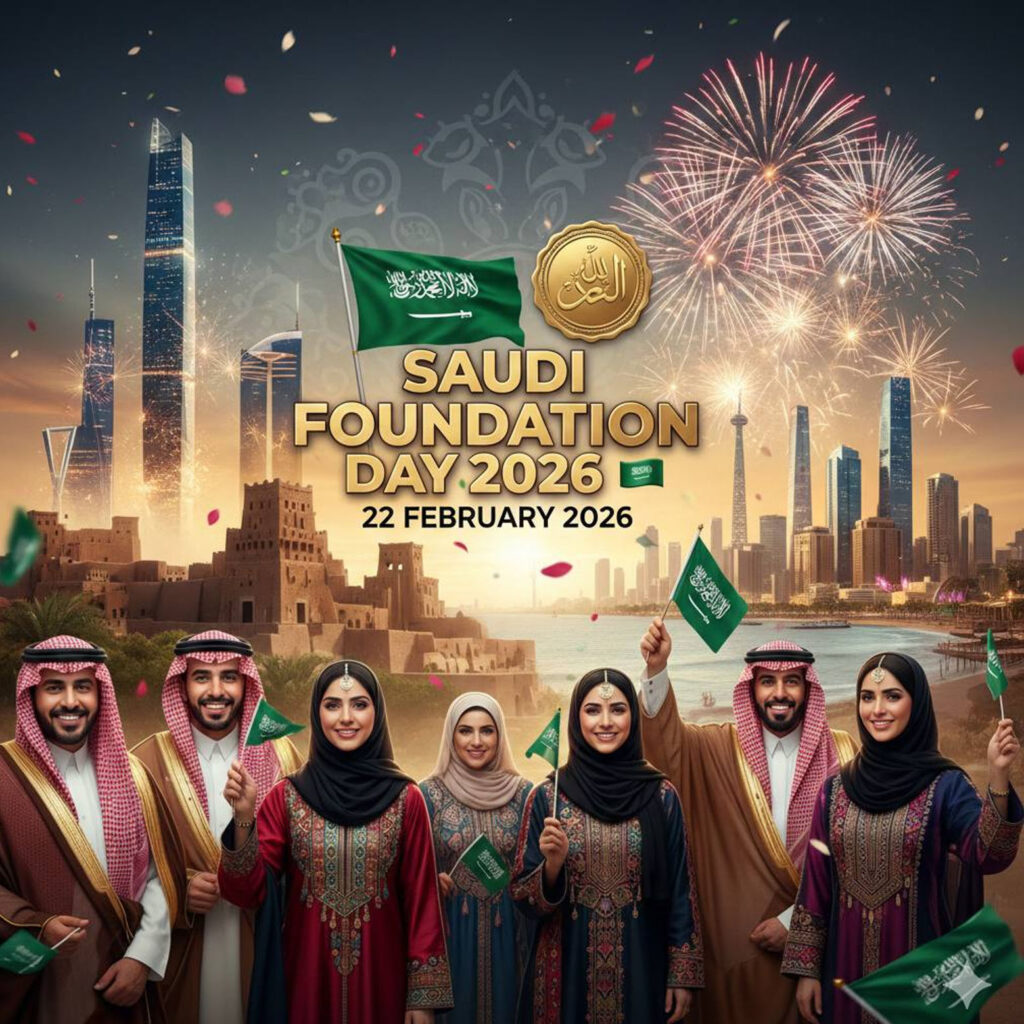
In 2026, celebrations span the kingdom from Riyadh to Jeddah, from Abha to Al-Ula. The color yellow — chosen because it appears prominently in the historical designs and decorations associated with the founding era — adorns buildings, clothing, and public spaces. Families gather for traditional meals, and social media fills with personal expressions of national pride as Saudis share their own connections to the country’s history.
Diriyah serves as the ceremonial heart of the day. Special events at the At-Turaif District — the UNESCO World Heritage Site that was once the capital of the First Saudi State — draw thousands of visitors and dignitaries. Cultural performances, historical exhibitions, and educational programs offer Saudis and tourists alike a window into the world of Imam Muhammad ibn Saud and the community he governed three centuries ago.
Across the country, schools organize programs that bring Saudi history to life for younger generations. The Saudi government has invested significantly in making Foundation Day an educational as well as a celebratory occasion, recognizing that national identity is strengthened when citizens understand the story of their nation not just emotionally but intellectually.

The Global Dimension: A Nation Announcing Itself
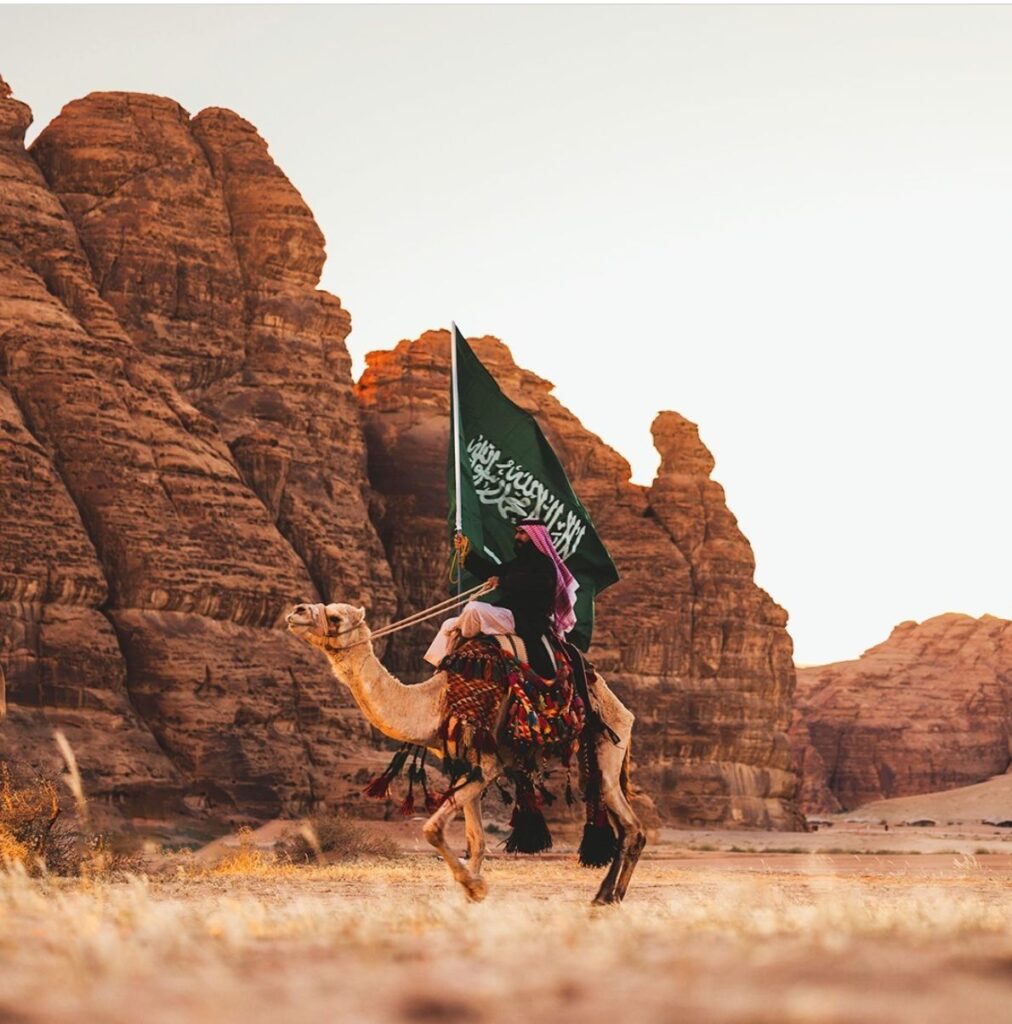
Foundation Day has also acquired an international dimension that reflects Saudi Arabia’s growing global profile. In 2026, as the kingdom continues to deepen its economic partnerships, expand its diplomatic reach, and position itself as a hub for global events and investment, Foundation Day becomes an occasion not just for domestic reflection but for broadcasting the Saudi story to the world.
Foreign embassies in Riyadh receive invitations to celebratory events. Saudi cultural centers around the world host exhibitions and performances. International media cover the day with increasing depth and sophistication, recognizing that understanding Saudi Arabia’s foundational narrative is essential for understanding the country’s contemporary motivations and ambitions.
There is a clear strategic intent behind this outward-facing dimension of Foundation Day. Saudi Arabia is, in 2026, a country that wishes to be understood on its own terms — not simply as a producer of oil or a player in regional geopolitics, but as a civilization with a deep history, a coherent identity, and a genuine vision for its own future. Foundation Day provides a platform for that argument to be made to the world.
Heritage and Modernity: The Central Tension and Its Resolution
Perhaps the most intellectually interesting aspect of Foundation Day is what it reveals about Saudi Arabia’s relationship with its own past. The kingdom is simultaneously one of the most rapidly modernizing societies on earth and one of the most committed to honoring its historical and religious heritage. These two impulses might seem to be in tension, and at times they are. But Foundation Day suggests a particular way of resolving that tension.
The founding vision of Imam Muhammad ibn Saud was not a static blueprint. It was a set of principles applied to the circumstances of the eighteenth century, capable of being reapplied — thoughtfully, selectively, intelligently — to the circumstances of the twenty-first. Just as the Second and Third Saudi States rebuilt upon the foundations of the First without simply replicating it, so too does contemporary Saudi Arabia draw on its heritage while adapting it to the demands of a globalized, technological, and rapidly evolving world.
Foundation Day, viewed through this lens, is not a conservative celebration of tradition for its own sake. It is a renewal of the founding compact — a reminder that the Saudi state has always been a project of purposeful construction, shaped by leaders who were willing to make bold decisions in service of their people and their land.
Young Saudis and the Meaning of Foundation Day
No account of Foundation Day 2026 would be complete without attention to the generation that will carry it forward. Saudi Arabia has one of the youngest populations in the world, and young Saudis are navigating an extraordinary moment in their country’s history. They are the primary beneficiaries of Vision 2030’s social reforms, the first generation to grow up with cinemas and concerts and mixed-gender public spaces as normal features of daily life.
For many young Saudis, Foundation Day resonates in a deeply personal way. It is a moment to connect with a heritage that might otherwise feel remote, to find in the story of Imam Muhammad ibn Saud and the founding of Diriyah something that speaks to their own experience of building and belonging. The day’s emphasis on pride in origins provides a kind of anchor — a sense of rootedness — in a time of rapid change.
Social media plays an enormous role in how young Saudis engage with Foundation Day. Platforms are flooded on the twenty-second of February with creative content — poetry, artwork, short films, personal reflections — that reimagines the founding story through contemporary eyes. This organic, youth-driven cultural expression is one of the most striking features of how Foundation Day has evolved since its establishment.
Looking Forward: What Foundation Day Promises
As Saudi Arabia marks Foundation Day in 2026, the country stands at a genuine crossroads. The promises of Vision 2030 are beginning to be fulfilled in concrete, measurable ways. The economy is diversifying. Society is opening. The kingdom’s international standing is substantial and growing. But significant challenges remain — in economic development, in social integration, in the complex dynamics of a region that is rarely stable.
Foundation Day is, in this context, more than a celebration. It is an act of collective affirmation — a statement that the Saudi people have navigated three centuries of change and challenge before, that they have rebuilt their state from the ruins of defeat, and that they are capable of meeting the demands of the present and the future with the same resilience and resolve that animated the founding moment of 1727.
Imam Muhammad ibn Saud could not have imagined the country that carries his legacy in 2026. But the essence of what he established — a commitment to unity, to purposeful governance, and to the welfare of the community — remains legible in the Saudi Arabia of today. That continuity, across three hundred years, is what Foundation Day exists to honor, to celebrate, and to renew.
In the yellow-lit streets of Riyadh and Jeddah, in the ancient alleys of Diriyah, in the classrooms and family gatherings and social media feeds of a nation in motion, the twenty-second of February 2026 carries the same message it has carried since the very first Foundation Day celebration: Saudi Arabia knows where it comes from. And it knows, with considerable confidence, where it is going.
Foundation Day (يوم التأسيس) is observed annually on February 22 in the Kingdom of Saudi Arabia, commemorating the establishment of the First Saudi State by Imam Muhammad ibn Saud in 1727.